Blog 06.2026
Five performance dimensions that determine whether BESS projects deliver
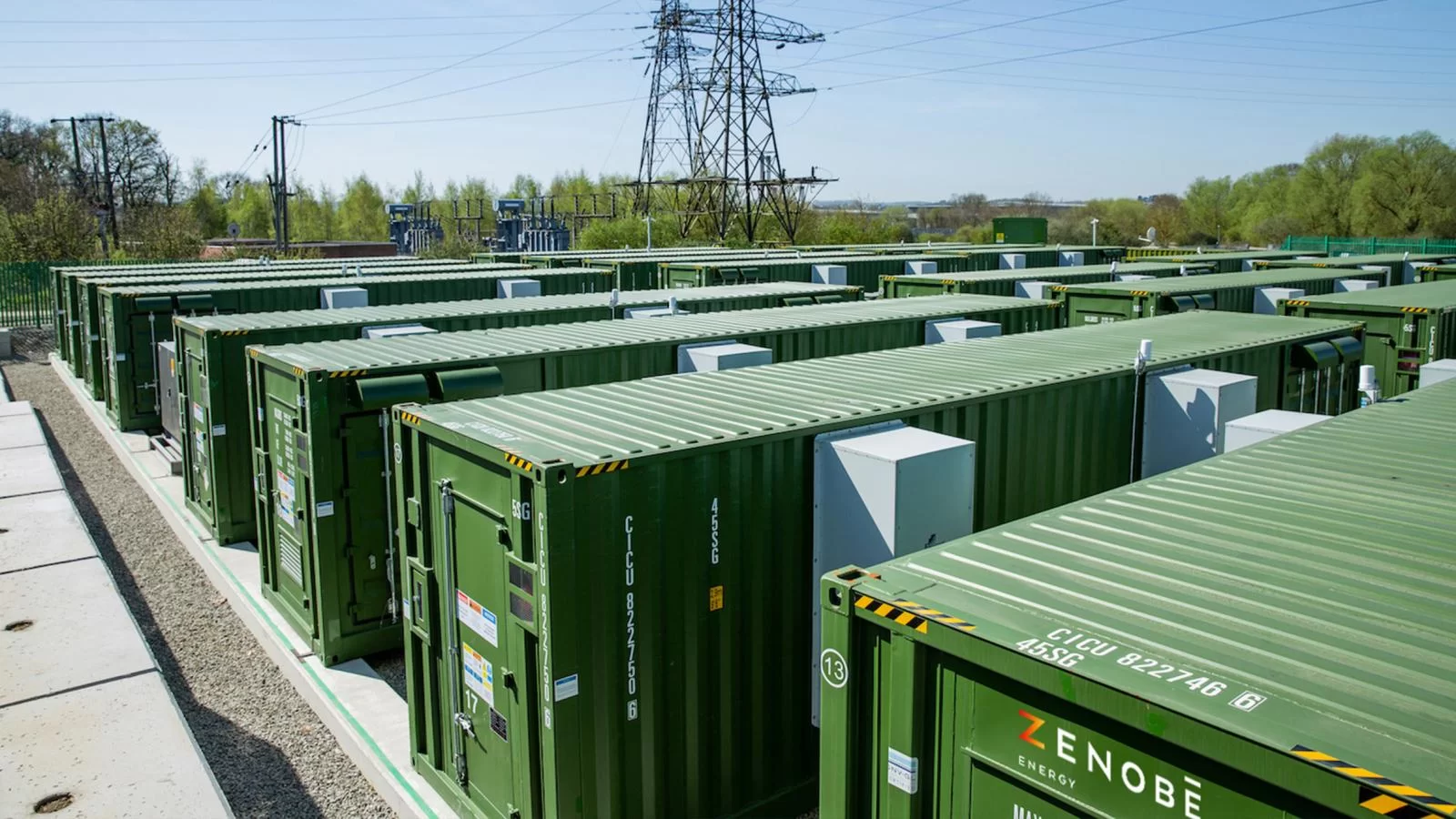
Battery energy storage systems (BESS) are essential for integrating renewable energy projects into the power grid, enhancing stability and ensuring a return on investment. However, owning or operating one requires an understanding of more than just the headline specifications. A BESS that looks good on paper can still underperform in ways that quietly erode revenue, and knowing where to look is half the battle.
What is BESS?
Before getting into performance, it helps to understand what a BESS actually does. The BESS system charges and discharges electricity through a grid connection, and revenue is recorded at the point of metering. The key numbers are power (MW), duration (hours), and energy (MWh, or power multiplied by duration).
Batteries degrade over time due to aging, cycling, and heat. A system that starts life at, for example, 150MWh may only hold 120MWh by year seven. State of Health (SoH) tracks this degradation as a percentage of original capacity. State of Charge (SoC) tells you how much of that remaining capacity is currently charged. Both figures matter, and both have limits, which leads directly to the five dimensions.
1. Availability
Availability measures the percentage of time a system can deliver its rated power. When a system is unavailable due to equipment failure, that outage is typically covered under a performance guarantee. Grid outages, planned maintenance, and operator-caused downtime generally are not.
The fine print is important here. When does unavailability start being counted, from the moment remote monitoring detects a fault, or only after a formal notification process? That distinction can mean hours of uncompensated downtime. You should also know whether you are required to hold spare parts on site for the guarantee to remain valid, and ask your supplier for real fleet availability data to back their commitment.
2. SoC Accuracy
State of Charge is an estimate rather than a direct measurement. Traditionally, it was calculated through current integration; however, modern utility-scale systems now use advanced filtering methods, such as Extended Kalman Filters (EKF) or AI-driven models. This advanced modeling is essential for lithium iron phosphate (LFP) batteries, as it accounts for their flat voltage plateau and hysteresis, minimizing SoC errors, which can exceed 20% if left unmanaged.
The financial consequences of SoC errors include imbalance costs, potential de-rating by the grid operator, and lost revenue on offtake contracts.
The practical fix is ongoing calibration, ideally automated and remote rather than requiring on-site work that interrupts operations. A real-time SoC accuracy guarantee is much stronger than a one-time test at commissioning.
3. Imbalance
Connected battery cells rarely hold exactly the same charge. When they drift apart, the weakest cell limits the output of the entire group, stranding energy that the system technically contains but cannot deliver. A 5% imbalance across linked cells may sound minor, but it translates directly into shortened discharge duration and potential penalty exposure. In utility-scale applications, modern battery management systems (BMS) almost always monitor cell-level voltages in real time. The issue is not usually a lack of data, but rather a lack of visibility or high-level diagnostic tools for the end operator in the SCADA interface. Therefore, it’s important that the system has automated analytics so that operators are not looking at “string-level averages,” which mask the cell-level deviations that cause underperformance.
The compounding problem is that many systems do not report state of balance in real time, leaving operators to guess whether they are overestimating available capacity. Automated passive and active balancing, which runs in the battery management system without interrupting operations, is the strongest solution. Passive balancing dissipates excess charge from higher cells through resistors, while active balancing shuttles charge between cells and generally handles larger imbalances more quickly. A periodic top-balancing charge cycle is the fallback when cells have drifted further than routine balancing can correct.
4. Round-Trip Efficiency
Every time energy flows through a BESS – through the main and isolation transformers, cables, inverters, and battery – some is lost as heat. As a result, the batteries, and sometimes the inverters, may need cooling. This is round-trip efficiency (RTE). RTE is the ratio of energy out to energy in. In markets with narrow price spreads, efficiency losses can cut into margins.
RTE is sensitive to operating conditions: site temperature, discharge duration, cycling profile, and auxiliary power demand all affect the real-world figure. It can change materially depending on the season. When comparing supplier RTE claims, confirm the measurement point and the conditions assumed. A number quoted under favorable lab conditions may not reflect what the site will see in operation. Ask for data from real assets, and understand how RTE is expected to change as the system ages.
5. Energy Retention
Energy retention is the degradation question – how much energy the system can deliver per discharge as it ages. It is the metric that underpins financial models and bank loan assumptions, making it relevant to every stakeholder in the project.
When reviewing energy retention guarantees, prioritize comparisons in kilowatt-hours (kWh) rather than SoH percentages. Two systems with identical SoH can have different energy outputs depending on their depth of discharge limits and initial oversizing. Examine the usage “envelope” defined in the guarantee closely, paying particular attention to cycles per day, rest periods, average SoC, and operating temperature profiles. A guarantee calibrated to a lighter duty cycle than your actual dispatch profile offers little protection against accelerated degradation.
Flexible Performance Guarantees, which adjust the degradation curve based on actual usage patterns, give more precision than a fixed curve, particularly if your dispatch profile shifts over time.
The bigger picture
Although performance guarantees provide a vital financial backstop, liquidated damages rarely cover the full opportunity cost of underperformance. In many high-volatility markets, missing a single day of high-spread revenue can jeopardize the profitability of an entire year. A robust guarantee must extend beyond power delivery to include minimum system uptime, rapid response times, and guaranteed windows for remote diagnosis and resolution. The strongest foundation is a supplier who backs their commitments with real-world fleet data and engineering designed to prevent outages rather than merely compensate for them. Understanding these five dimensions is where the evaluation begins.
You may also be interested in

JERA Nex, leading the energy transition
Discover how JERA Nex advances sustainable energy with renewable projects and a goal of zero CO2 emissions by 2050.

A new renewables company to transform the global energy system
JERA Nex launches a new renewables company to accelerate the global energy transition and scale clean power solutions for a net zero future.

Navigating geopolitical uncertainties to build a sustainable energy system
Explore how cooperation between public and private sectors is key to overcoming challenges and building a sustainable energy system.

Reasons to be cheerful: A new way to do renewables
Explore the optimism behind JERA Nex's launch and its commitment to scaling renewable energy despite market challenges.