Blog 02.2025
On the ground in Arkansas: Visiting Happy Solar Farm
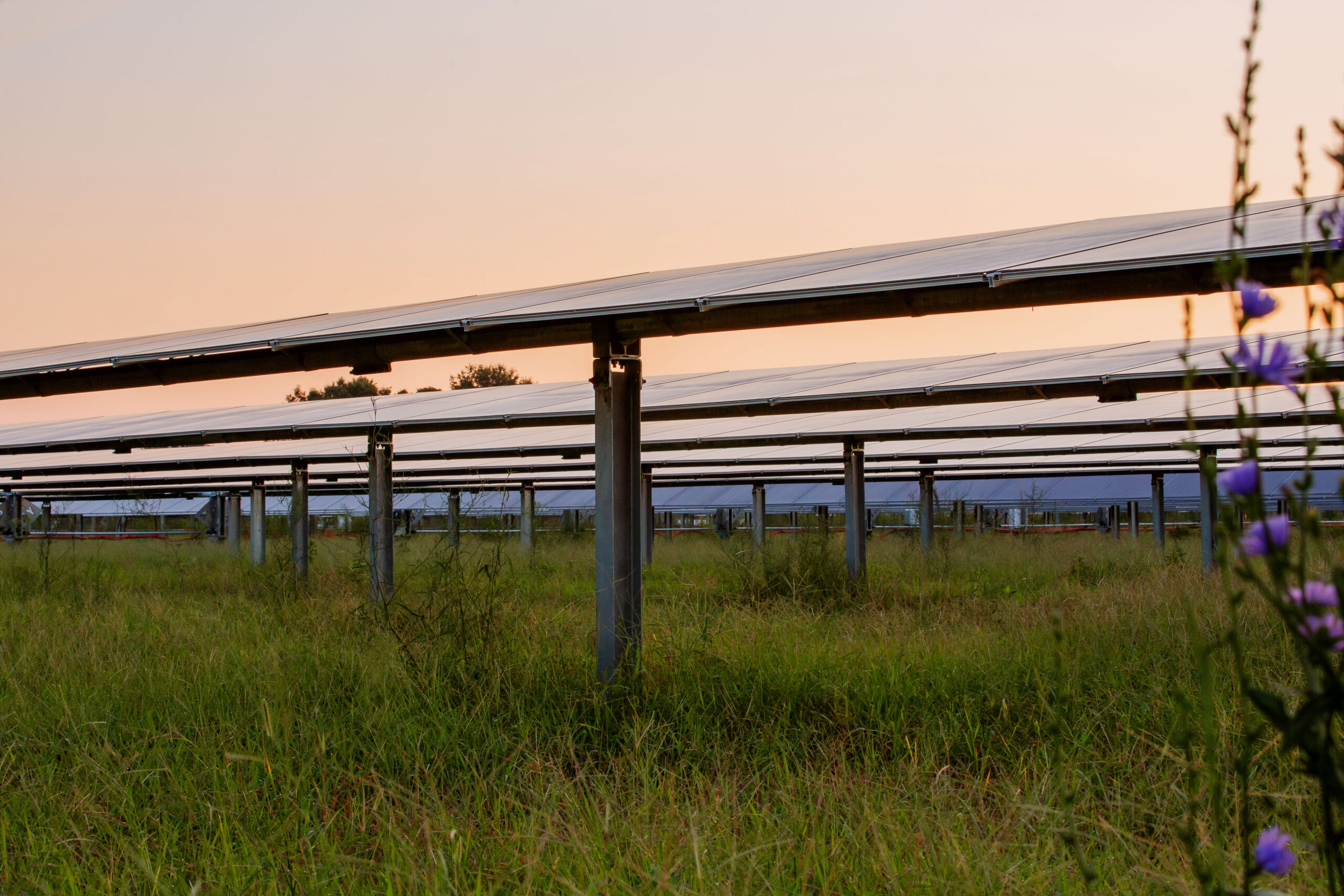
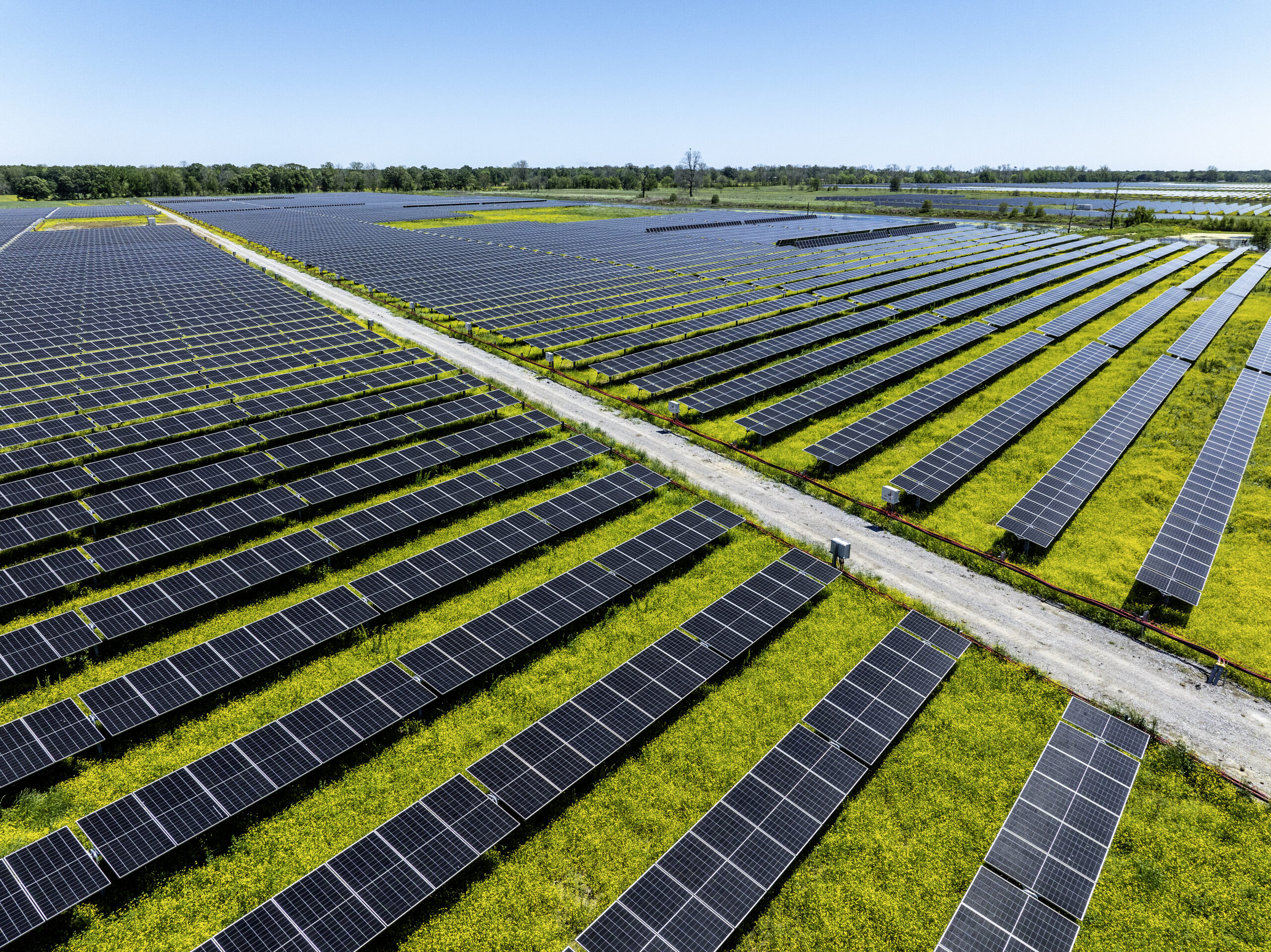
Situated in the heart of rural Arkansas about an hour from state capital Little Rock, Happy Solar Farm provides a sustainable energy source to the local community by converting the sun’s energy into electricity.
The power generated on site is provided to Conway Corp, a Conway city-owned utility, under a 20-year power purchase agreement (PPA).
Happy is formed of rows of solar arrays, groups of solar panels connected to one another along with an inverter that converts the DC electricity into an alternating current (AC), as well as other components that contribute to the functioning of the panels and transmission of the energy. Happy has more than 300,000 solar photovoltaic modules on single-axis trackers to maximize energy collection.
While the site itself is large at 880 acres, its flat topography and the low height of the solar panels make it hard to get a sense of the scale of the 95MW site unless you drive around it. Once you do, you can begin to understand how the site generates enough clean electricity to power approximately 21,000 homes.
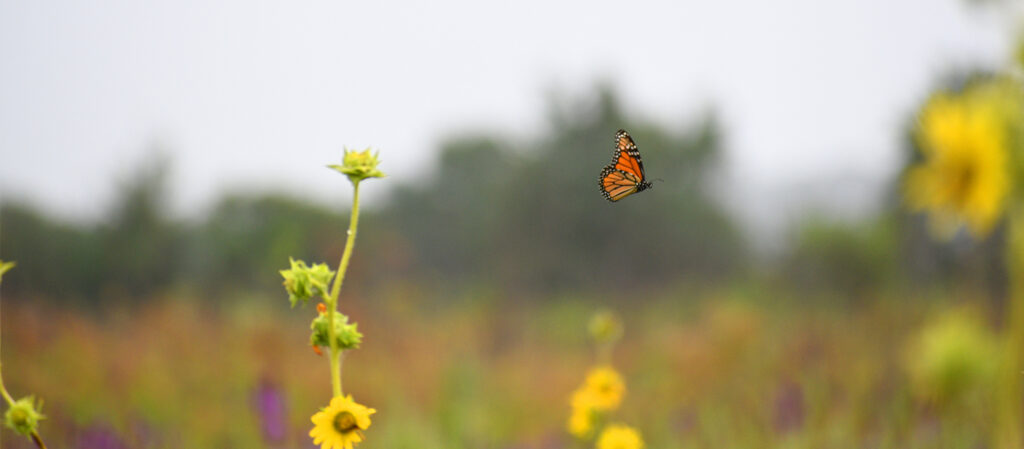
Arkansas is nicknamed ‘the natural state’, and our site includes a pollinator site developed with the Arkansas Monarch Conversation Partnership. This is a protected habitat designed to encourage monarch butterflies and other pollinators to thrive. In the warmer months, we have sheep grazing on site too, helping to trim the grass around the solar arrays.
There are several benefits to grazing sheep on solar sites, a practice known as ‘agrovoltaics’, the use of land for farming and energy simultaneously. It’s an approach that allows sites to be dual-use, maximising the economic and environmental benefits. Sheep are natural grazers, helping with vegetation management on sites ensuring panels remain unobstructed by overgrown grass and weeds, allowing them to function at maximum efficiency. There are studies showing that having sheep on site can also increase biodiversity and soil health, with sheep dung acting as a natural fertilizer and the animals carrying seeds in their coats and distributing them across the site. For now, sheep grazing is one of the most common types of agrovoltaics, but other sites are pioneering fruit farming, vegetable growing and other crop harvesting.
In fact, Happy is one of the subjects of a study by the University of Arkansas to understand how solar farms can double up as wildlife habitats. There will be researchers on site, wildlife cameras installed and data collected throughout the year. The findings will be combined with those from 90 sites across Arkansas, Kansas and Louisiana to provide a comprehensive overview of the attributes and management methods that are most closely associated with increased biodiversity within solar sites. Read more about the study here.
You may also be interested in

Launching JERA Nex bp
Discover the launch of JERA Nex bp, a joint venture with bp focused on offshore wind development and operations with 13GW capacity.
Solar energy and wildlife preservation: Partnership with University of Arkansas
JERA Nex and University of Arkansas study solar energy's effects on wildlife and habitats at Happy Solar Farm in Arkansas.
Is Hybridization the Key to Securing our Energy Systems?
Is Hybridization the Key to Securing our Energy Systems? Battery storage plays a key role in this transition.
Trends, challenges and opportunities for onshore renewables in 2025
Explore key trends, challenges, and opportunities shaping onshore renewables in 2025 across major markets and policy landscapes.